The Rift breaks the assumption that a measurement taken twice will agree with itself. The expedition has stopped asking why and started cataloguing how. This record lists the effects that have been measured by more than one instrument.
# Depth drift
A laser range-finder, a cable counter and a radio echo will report three different depths for the same point in the shaft. Each is internally consistent. None agrees with the others for long. Survey crews learned to measure depth in phase intervals: the number of stable stretches crossed, not the number of metres travelled. The carrier’s depth counter reads in phase intervals. A sector is ten intervals; a floor is one.
# Time skew
The first probe, K-1, sent a telemetry packet timestamped eleven minutes before its launch (see Eleven minutes early). Later instruments recorded smaller errors in both directions. Clocks inside the shaft do not run fast or slow in any consistent way. Messages simply arrive out of order. In the Void Passage, optical and radio returns can come back before the signal that caused them.
Asterion’s relay chain was designed around this problem. Each relay stores and re-sends packets until it receives confirmation, so a message may arrive minutes or hours late but rarely arrives twice. When the relays failed in 2217, that buffer was lost. See the Asterion blackout.
# Geometry folds
At sector boundaries, the shaft’s internal geometry can fold, loop or reproduce a previous environment. A crew may cross into a new sector and find walls, vents and rails matching a stretch already mapped ninety intervals above. This is the physical basis of echo sectors. Folds occur only at boundaries. Inside a sector, the shaft behaves almost like ordinary architecture, which is why operations are planned floor by floor.
# Material memory
Rift alloy and Rift Shards retain energy signatures after removal. A relay casing recovered in 2192 was warm, although it had been designed to run cold. A strip of alloy brought up in 2206 stayed magnetised without a power source. Laboratory tests show that shards can replay physical states (heat, field strength, vibration) that were present when they formed. The crew calls this material memory. Nobody knows whose memory it is.
# Working rules
Pilots who fly the shaft follow a short list of rules drawn from these effects:
- Trust phase intervals, not metres.
- Never release the descent lock between route markers; the route you came down may not be there.
- Treat every repeated environment as new. Echoes are not copies.
- Log everything twice. One of the logs will arrive.
The rules above come from Asterion pilot training material. Ilyan Venn is listed as the author of the last rule.
Related articles
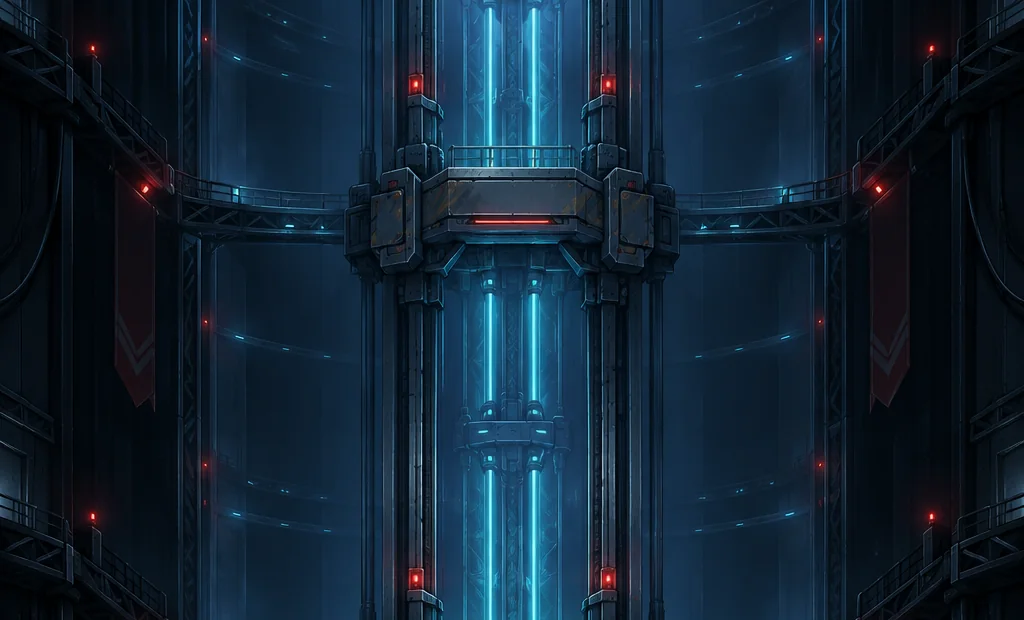 ARCHIVE RECORDThe RiftA perfectly straight alloy-lined shaft found beneath the Khepri Basin in 2189. Its depth changes, its echoes repeat, and its end has never been reached.
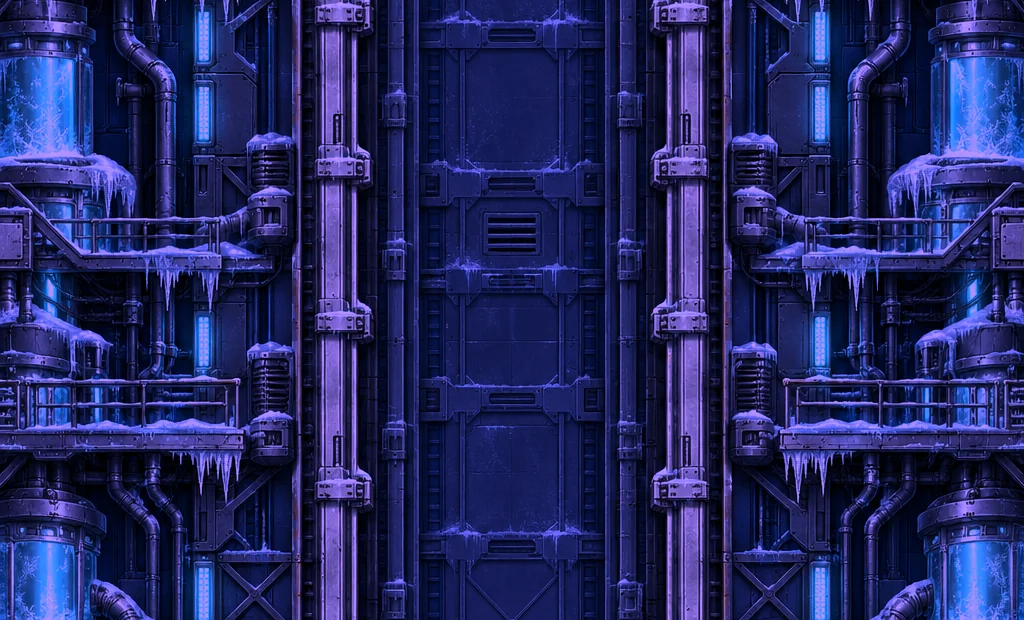 ARCHIVE RECORDEcho sectorsWhy the hundred mapped sectors repeat ten environments and ten guardian patterns, and why no echo is a perfect copy.
 ARCHIVE RECORDRift ShardsFragments of anomalous material that keep a stable energy signature after removal. Power source, research material and possibly memory.
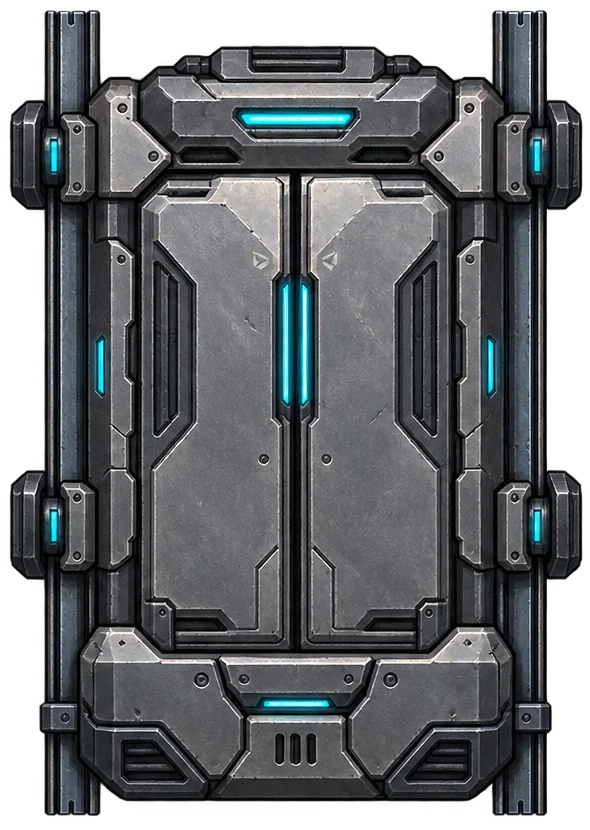 ARCHIVE RECORDThe lift programHow a one-way tether platform became a return-capable carrier: the phase coupler, the magnetised strip and the price paid to build the C-9.