The phase coupler is the invention that made the C-9 possible. It does two jobs at once: it draws a small, stable electric current from a Rift Shard, and it uses a wrapping of magnetised Rift alloy to lock the carrier’s guide shoes to one stable route through the shaft.
# Power budget
The coupler’s output is limited. Every powered system draws on it. A turret mount, shield field or drone bay goes offline if the pilot asks for more than the coupler can supply. The power planner allocates output in a fixed order:
- 1First turret⚡ 3
- 2Shield field⚡ 4
- 3Remaining turrets⚡ 3 each
- 4Drone bay⚡ 3
An unpowered mount keeps its weapon and ammunition. It simply cannot fire until power is restored. Even the basic turret, which never runs out of ammunition, needs power.
Output can be raised in the field by the Reactor Core calibration and permanently by Reactor Efficiency research. The Power Core sector also seems to feed the coupler from outside.
# Anchoring
The alloy wrapping comes from the strip recovered by platform P-3 in 2206. With power flowing, the coupler holds the carrier to the route it descends. This is the descent lock. With it engaged, geometry folds cannot strand the carrier. With it released, they can.
# Risks
The coupler makes the carrier visible. Everything in the shaft that responds to power responds to it. Ilyan Venn believed the machines were not attracted to the carrier’s weapons, but to the shard at its core.
Related articles
 ARCHIVE RECORDRift ShardsFragments of anomalous material that keep a stable energy signature after removal. Power source, research material and possibly memory.
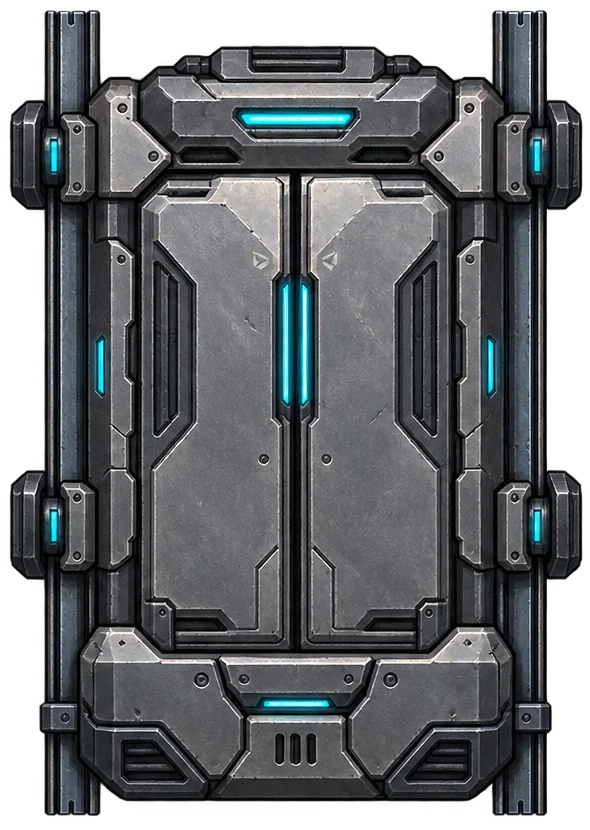 ARCHIVE RECORDC-9 “Wayfarer”A crew-rated industrial elevator rebuilt as a single-pilot armoured carrier. The only vehicle descending the Rift.
 ARCHIVE RECORDShieldsA phase field that converts stored energy into protection. Capacity resets every floor; the energy to fill it does not.
 ARCHIVE RECORDSupport dronesNarrow-purpose survey and defence craft launched from the carrier’s drone bay. They fire only when the bay is powered.